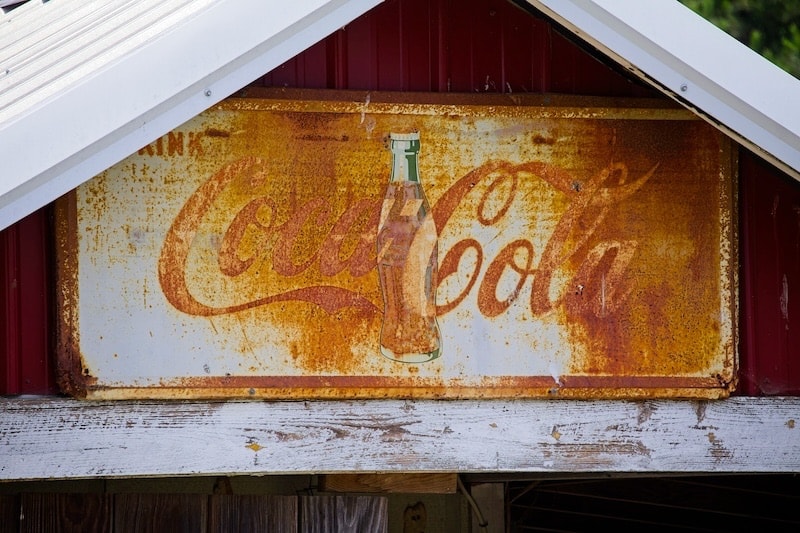
Before digital signage took over, every shop told its own story through enamelled sheet metal, sinuous neon tubes and hand-carved wooden letters. Vintage signs were never mere commercial indicators: they were manifestos of identity, often crafted by hand by specialized artisans who combined typographic, metallurgical and artistic skills.
Workshops: where the sign was born
In mid-20th century workshops, signs were designed as true feats of engineering. Skilled enamellers applied layers of vitrified paint onto metal sheets, a process that ensured weather resistance and vivid colors meant to last for decades. It's not uncommon today to find signs from mechanical workshops, hardware stores or gas stations that still retain their original brilliance.
From bars to cinemas: the neon era
With the 1950s and 60s, neon became the undisputed star of city streets. Bars, cinemas and nightclubs competed to light up their façades with curved, colorful signs, turning simple signage into urban scenography. This era left behind pieces now considered true works of industrial design.
Why they're so sought after today
The charm of vintage signs lies in their uniqueness: no two pieces are ever identical, and every imperfection tells a story. Collectors and interior designers choose them to:
- Add authentic character to contemporary spaces
- Enhance industrial or retro-style environments
- Invest in objects with growing historical and artistic value
Finding an authentic vintage sign often means reconstructing a small fragment of local history: the name of a long-gone business, the graphic style of an era, the hand of a forgotten craftsman. This is why, on Konbiny, every vintage sign is selected and presented with the same care reserved for a collector's piece.